

TheraWolf PainBalm and NeuroBalm Claims Evaluated: What Buyers Are Overlooking About Topical Relief Formulas, Ingredients, and Pricing in 2026
A 2026 consumer overview of TheraWolf PainBalm and NeuroBalm ingredient disclosures, topical magnesium balm research context, botanical pain relief cream claims, nerve comfort formula positioning, pricing structure, and key factors buyers commonly overlook before purchasing
Nashville, TN, March 27, 2026 (GLOBE NEWSWIRE) -- This article contains affiliate links. If a purchase is made through these links, a commission may be earned at no additional cost to the buyer. This article presents publicly available product information in an informational format and does not constitute medical, health, or treatment advice. All product details described below are stated as presented by the company and should be verified directly on the official website before any purchasing decision.
TheraWolf PainBalm and TheraWolf NeuroBalm are topical botanical balms. They are not FDA-approved drugs, OTC medications, or dietary supplements. The marketing claims referenced in this article describe the company's positioning of these products. Neither product has been evaluated through published independent clinical trials as finished formulations.
Consumer interest in TheraWolf's topical formulations, PainBalm and NeuroBalm, has continued to grow as more buyers explore non-prescription comfort products in 2026. Alongside that interest, questions around ingredient transparency, pricing structures, and how topical formulations actually align with their marketing claims have become increasingly common among buyers researching these categories.
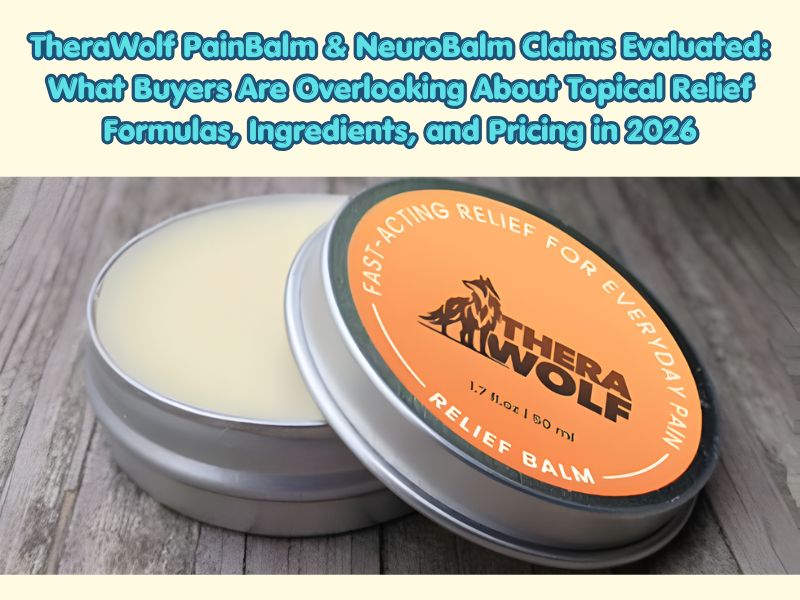
Many consumers researching topical comfort products describe concerns like morning stiffness in the knees, a shoulder that aches after long work hours, or persistent tingling in the feet that disrupts sleep. If that sounds familiar, you've probably searched for something that might help without adding another pill to the routine — and that search is likely how you came across TheraWolf.
The brand offers two distinct topical balm formulations: TheraWolf PainBalm, positioned for joint and muscle discomfort, and TheraWolf NeuroBalm, positioned for nerve-related sensations like tingling, burning, and numbness. Both are built around botanical ingredients with roots in Traditional Chinese Medicine, but they target different types of physical discomfort.
This overview walks through how the company describes its products, while also covering key considerations worth looking into when evaluating topical relief options. The goal is straightforward: give you what you need to decide whether either formula fits your situation — or doesn't.
Current product details and pricing for the joint and muscle formula can be confirmed by viewing the current TheraWolf PainBalm offer on the official TheraWolf page. For the nerve comfort formula, details are available by viewing the current TheraWolf NeuroBalm offer on the official TheraWolf page.
Individual results vary. Topical balms are not substitutes for professional medical evaluation, diagnosis, or treatment. If you're experiencing persistent or worsening pain, numbness, tingling, or burning sensations, talk to a qualified healthcare provider before reaching for any topical product.
Why Some Consumers Are Looking Closer at Topical Relief Claims in 2026
The topical pain relief and nerve comfort category has expanded significantly over the past two years. More brands are entering the space with botanical formulations, and more consumers are exploring non-prescription alternatives to manage everyday discomfort. That's not a bad thing — but it does mean there's a lot more marketing noise to sort through.
As consumer interest in topical comfort products grows, some buyers are taking a closer look at how ingredient disclosures, marketing language, and pricing structures align. Specifically, three patterns keep surfacing across this product category that are worth understanding before you spend money:
Ingredient lists don't always tell the full story. A product can list impressive-sounding botanicals without disclosing individual concentrations. That makes it difficult to compare what you're getting against published research, which typically tests specific compounds at specific dosages.
Marketing percentages may not mean what you think. When a brand states that a high percentage of customers experienced a particular outcome, the methodology behind that number — sample size, measurement criteria, follow-up period — matters as much as the number itself. Without that context, the figure is marketing presentation, not clinical evidence.
Pricing framing can create urgency that doesn't reflect actual value. "70% off" only means something if the original price was real and current. Evaluating what you actually pay matters more than how the discount is described.
None of this means TheraWolf — or any other brand in this space — is doing anything wrong. It means that as a buyer, you're better off understanding these dynamics before making a purchasing decision rather than after.
What Is TheraWolf and How the Two Formulas Differ
TheraWolf is a brand offering topical botanical balms marketed for physical discomfort. According to the company's product pages, the formulations are described using "Made in USA" language. However, other sections of the company's published terms include additional manufacturing and fulfillment details, which consumers may wish to review directly for clarity. The company also states that the products use plant-based, cold-pressed ingredients with no parabens, paraffins, fillers, or synthetic chemicals, and that each batch is produced in small quantities to maintain consistency.
Here's how the two products break down:
TheraWolf PainBalm is the company's joint and muscle formula. The brand describes it as a topical balm for supporting comfort and circulation in areas including the knees, elbows, shoulders, back, and neck. If your primary concern is stiffness, soreness, or aching joints, this is the formula the company positions for that purpose.
TheraWolf NeuroBalm is the company's nerve comfort formula. The brand describes it as formulated to calm overactive nerves and support overall nerve wellness, targeting sensations like burning, tingling, numbness, and sensitivity in the feet, legs, hands, arms, and back. If your primary concern is nerve-related discomfort rather than joint or muscle pain, this is the formula the company positions for that purpose.
Both are topical balms you apply directly to the skin. Neither is a dietary supplement, an OTC drug, or a prescription medication. According to the company's own disclaimers, the products are not FDA-approved and are not intended to diagnose, treat, cure, or prevent any disease. That context is worth understanding when evaluating what the company can substantiate about the products' effects.
TheraWolf PainBalm Ingredients: What the Label Shows and What It Doesn't
According to the company's published ingredient information, TheraWolf PainBalm contains: Angelica, Aniba Rosodora (Rosewood Oil), Beeswax (Cera Alba), Chuanxiong (Ligusticum), Ginger Oil, Holly, Jojoba Oil, Lavender Oil, Magnesium Chloride, MSM (Methylsulfonylmethane), Peppermint Oil, Safflower, Sea Buckthorn Extract, Shea Butter (Butyrospermum), Sichuan Pepper, Vitamin B6 (Pyridoxine), and Wormwood / Black Vitex.
That's a substantial ingredient list, and several of these compounds do have published research behind them. Here's what that research actually says — and where the gaps are:
Peppermint Oil contains menthol, one of the most extensively studied topical counterirritants. Menthol activates cold-sensitive receptors in the skin, producing a cooling sensation that can temporarily modulate how you perceive pain. It's recognized in the FDA's OTC external analgesic monograph as an active ingredient at concentrations between 1% and 16%. That said, TheraWolf does not disclose the specific menthol concentration in its formulation, and the product does not appear to carry an OTC Drug Facts panel.
MSM (Methylsulfonylmethane) is an organic sulfur compound studied for joint and connective tissue support. A 2006 pilot study in Osteoarthritis and Cartilage examined oral MSM for joint comfort. Topical MSM research is more limited — the compound is included in many formulations, but whether it penetrates skin at meaningful concentrations for deep tissue effects hasn't been extensively validated in peer-reviewed research.
Arnica Oil (referenced in some TheraWolf marketing materials) is widely used in topical comfort formulations. A 2010 systematic review in Rheumatology International found that topical arnica may provide temporary comfort comparable to topical ibuprofen in some study populations. Those findings relate to specific arnica preparations at known concentrations — not TheraWolf's particular blend.
Magnesium Chloride plays a recognized role in muscle relaxation and nerve function when present systemically. The question for topical application is whether magnesium applied to the skin penetrates sufficiently to affect deep tissue. Published dermatological research remains mixed on this point. The brand positions magnesium as a key component, which is worth noting — but topical delivery differs meaningfully from oral or intravenous delivery.
The formula also includes several Traditional Chinese Medicine ingredients — Chuanxiong (Ligusticum), Wormwood, Sichuan Pepper, and Safflower — that have centuries of use in topical preparations for circulation and comfort. These botanicals carry significant historical application but limited controlled clinical trial data in Western peer-reviewed literature when used in topical balm formulations.
Here's the bottom line on ingredients: individual compounds in this formula have published research behind them. But that research describes what those compounds demonstrated under specific study conditions at specific dosages. It doesn't confirm that TheraWolf PainBalm as a finished multi-ingredient product produces equivalent effects. No published clinical trial appears to have evaluated PainBalm as a proprietary finished formulation.
This is ingredient-level research, not product-level evidence. That's a distinction worth keeping in mind.
TheraWolf NeuroBalm Ingredients: What the Label Shows and What It Doesn't
According to the company, TheraWolf NeuroBalm contains Magnesium Chloride, Vitamin B6 (Pyridoxine), MSM, Peppermint Oil, Lavender Oil, Ginger Oil, and additional botanical compounds. The formula shares several ingredients with PainBalm but places particular emphasis on components the company positions for nerve support.
Vitamin B6 (Pyridoxine) is essential for healthy nerve function — that's well established. Deficiency in B6 is associated with peripheral neuropathy symptoms. A review published in Nutrients has discussed magnesium's role in nerve signaling and neuroprotection. However, these findings relate to systemic levels of these nutrients — what happens when they're in your bloodstream — not what happens when they're applied to the surface of your skin. Whether Vitamin B6 applied topically penetrates deeply enough to meaningfully affect nerve function hasn't been established through robust peer-reviewed research.
Lavender Oil has published support for mild analgesic and calming properties in both aromatherapy and topical contexts. Ginger Oil contains compounds studied for warming and circulation-promoting effects. Both are common in topical comfort products but haven't been studied specifically within TheraWolf's proprietary blend.
The same principle applies here as with PainBalm: the ingredients have individual-level research behind them. The finished NeuroBalm formulation as a whole hasn't been evaluated through independent clinical trials.
If you're researching terms like "TheraWolf NeuroBalm for nerve pain," "does TheraWolf work for neuropathy," or "TheraWolf for burning feet," it's important to understand that the company's descriptions reflect intended use based on ingredient selection — not clinically validated outcomes for the finished product.
Common Factors Consumers May Overlook When Evaluating Topical Products
This section isn't specific to TheraWolf — it applies to any topical relief balm or pain relief cream alternative you might be considering. But it's especially relevant when marketing materials make strong claims.
Ingredient list vs. marketing highlights. In some cases, product marketing emphasizes select ingredients while full ingredient disclosures may include additional components that consumers should review carefully. A product might lead with "magnesium and peppermint oil" in its ads but contain a dozen or more additional ingredients that play different roles. Reviewing the full ingredient list — not just the headline ingredients — gives you a clearer picture of what you're applying to your skin.
Counterirritant mechanism vs. deep tissue claims. Most topical pain products work primarily through counterirritant action. Menthol creates a cooling sensation. Warming botanicals create heat. These sensations temporarily compete with pain signals, providing short-term comfort. This is well-established science. But when a product's marketing describes "targeting pain at the root" or "reducing inflammation at the source," that implies a level of deep tissue penetration that goes beyond what most topical formulations have been independently demonstrated to achieve.
Return policy complexity. A "60-day money-back guarantee" sounds straightforward — but the specific requirements matter. Do you need to return unused product? Is there a restocking fee? Does the refund include shipping costs? These details are typically in the terms and conditions, not the marketing headline. It's worth reading them before ordering rather than after.
Manufacturing transparency. Descriptions like "Made in USA" and "plant-based" appear on the company's product pages. More specific indicators of manufacturing and regulatory standards include whether the facility is FDA-registered for drug manufacturing, whether third-party testing is conducted, and whether a Drug Facts panel is present on the label. For TheraWolf, the products do not appear to carry an OTC Drug Facts panel, which is consistent with their positioning as botanical topical balms rather than OTC drugs.
How the Company Describes TheraWolf PainBalm and NeuroBalm
Before getting into what the research says, it's worth seeing exactly how the company itself describes each product on its official website:
The company markets PainBalm as a topical formulation positioned for joint and muscle comfort that "goes beyond masking pain" and "targets the root cause by reducing inflammation, increasing circulation, and soothing joint and muscle discomfort at the source." The company states that core ingredients have shown results in studies including "faster recovery, lesser swelling, and improved mobility, all without side effects or synthetic chemicals." The website describes the balm as suitable for knees, elbows, shoulders, back, and neck.
The company describes NeuroBalm as a formula designed "to promote comfort, improve circulation, and support overall nerve wellness." The website states that the balm is "formulated with carefully selected ingredients including magnesium chloride, vitamin B6, MSM, peppermint oil, lavender oil, and ginger oil" and describes these as "widely used to help support relaxation, comfort, and healthy blood flow."
Both product pages include marketing figures — the PainBalm page references "89% of customers" experiencing a positive outcome, and the NeuroBalm page references "87%." The source methodology, sample size, and verification process for these percentages are not publicly detailed. The company's own website notes that individual results may vary from person to person.
These descriptions come directly from the official website and represent the company's marketing positioning — not clinical findings or third-party assessments.
TheraWolf Pricing and Purchase Structure
According to pricing information published on the official website at the time of this overview, both TheraWolf PainBalm and TheraWolf NeuroBalm share the same pricing tiers:
According to the company, the website lists a single jar at $39.95, with multi-unit pricing presented at lower per-jar rates: two jars at $29.99 each, three jars at $25.90 each, and four jars at $22.99 each. Each tier is described with a corresponding discount percentage relative to what the company presents as the original retail price.
The discount percentages reference what the company describes as the original retail price. When evaluating pricing, focus on the actual amount you'd pay rather than the percentage framing. It's also worth noting whether the "original price" has ever been the standard selling price, or whether the discounted price is effectively the ongoing retail price. Pricing and terms can change, so verify current details directly.
For PainBalm pricing: view the current TheraWolf PainBalm offer on the official TheraWolf page.
For NeuroBalm pricing: view the current TheraWolf NeuroBalm offer on the official TheraWolf page.
TheraWolf Refund Policy and 60-Day Guarantee
According to the company's published terms, both products are presented with a 60-day money-back guarantee in promotional materials, with additional terms outlined in the company's refund policy. The company states that if the products don't help improve comfort within 60 days of daily use, customers can request a refund.
Before ordering, take a few minutes to read the complete refund policy on the official website. Look for specifics: whether unused product must be returned, whether shipping costs are covered, and what the refund processing timeline looks like. Holding on to your purchase confirmation and understanding the steps involved before you need them is always a good practice.
Who TheraWolf PainBalm May Align With
PainBalm may be worth exploring if you: Prefer plant-based topical options over synthetic formulations. Are looking for a topical relief balm to complement (not replace) your existing approach to joint or muscle comfort. Have already discussed your discomfort with a healthcare provider and are exploring supplemental topical options. Appreciate the Traditional Chinese Medicine botanical approach and are comfortable with the level of ingredient disclosure provided.
Other options may be more appropriate if you: Need transparent individual ingredient concentrations for comparison against published research dosages. Are looking for pharmaceutical-grade anti-inflammatory action — topical NSAIDs like diclofenac (Voltaren) have more extensive clinical evidence for inflammation reduction. Haven't had persistent joint or muscle pain evaluated by a healthcare provider. Prefer products with an OTC Drug Facts panel on the label.
Persistent joint or muscle pain can indicate underlying conditions that need professional diagnosis. A topical balm should complement appropriate medical care, not replace it.
Who TheraWolf NeuroBalm May Align With
NeuroBalm may be worth exploring if you: Experience mild nerve-related sensations and prefer a botanical topical approach. Have already discussed tingling, burning, or numbness symptoms with your healthcare provider. Are looking for a topical magnesium balm or nerve relief balm as a complementary option alongside medical guidance. Understand that topical delivery of nerve-supporting compounds differs from systemic delivery.
Other options may be more appropriate if you: Experience numbness, tingling, burning, or other nerve-related symptoms that haven't been medically evaluated — these can indicate conditions like peripheral neuropathy, diabetes-related nerve damage, or spinal issues that require professional diagnosis. Need documented clinical evidence for topical nerve support at specific ingredient concentrations. Prefer OTC-regulated products with standardized active ingredient dosing.
Nerve-related symptoms deserve medical attention. A nerve relief balm may provide temporary comfort, but it's not a diagnostic tool or a treatment for underlying conditions.
Consumer Questions About TheraWolf
Are TheraWolf products FDA approved?
No. TheraWolf PainBalm and NeuroBalm are marketed as botanical topical balms, not as FDA-approved products. According to the company's published disclaimers, the products are not FDA-approved and are not intended to diagnose, treat, cure, or prevent any disease.
What's the difference between PainBalm and NeuroBalm?
According to the company, PainBalm targets joint and muscle discomfort (knees, shoulders, back, neck, elbows), while NeuroBalm targets nerve-related sensations (tingling, burning, numbness in feet, hands, legs, arms). They share core ingredients but differ in emphasis — NeuroBalm leans more heavily on magnesium chloride and Vitamin B6 for nerve support.
Can you use both products together?
The company markets them as complementary formulas for different types of discomfort. If you're considering using both, it's worth discussing with your healthcare provider, particularly if you have sensitive skin or existing health conditions.
How long does TheraWolf take to show results?
According to the brand, many people notice an initial cooling sensation within minutes of application. For longer-term comfort, the company recommends consistent daily use over several weeks. Individual timelines depend on the type and severity of discomfort, how consistently you apply the balm, and your personal health variables. Results aren't guaranteed.
Is TheraWolf safe for daily use?
According to the company, both products are formulated with natural, plant-based ingredients and designed for daily use. They state the formulas contain no parabens, paraffins, fillers, or synthetic chemicals. A patch test before regular use is advisable, especially if you have sensitive skin or known allergies to essential oils or botanical extracts.
Where can you buy TheraWolf?
According to the company, the products are available through the official website. Some related products also appear on Amazon. The company advises purchasing from official channels to ensure product authenticity and refund eligibility.
How This Category Is Commonly Researched Online
Consumer search behavior in 2026 shows that buyers are doing more homework before purchasing topical comfort products than in previous years. Common search patterns in this category include terms like "topical pain relief balm," "nerve discomfort cream," "magnesium balm for muscle recovery," "natural joint relief cream," and "pain relief cream alternative."
Buyers also frequently search for product-specific terms such as "TheraWolf PainBalm ingredients," "TheraWolf NeuroBalm for neuropathy," "does topical magnesium work for pain," and "best nerve relief balm 2026." These searches suggest that consumers are not simply looking for a product to buy — they're looking for context that helps them evaluate whether a product's claims match the available evidence.
If you're in the middle of that research process right now, the ingredient analysis and claim-by-claim context earlier in this article are designed to help you navigate exactly that kind of evaluation — regardless of which product or brand you ultimately choose.
Key Takeaways
TheraWolf offers two botanical topical balms for different types of physical discomfort: PainBalm for joints and muscles, NeuroBalm for nerve-related sensations. Both contain ingredients with published research at the individual compound level, including menthol-containing peppermint oil, MSM, magnesium chloride, and Traditional Chinese Medicine botanicals.
The ingredients are real. The research on individual compounds is real. What hasn't been established is whether the finished formulations — with these specific ingredient combinations at undisclosed concentrations — produce the outcomes the marketing language implies. That's a gap worth understanding, not because it means the product doesn't work, but because it means the evidence picture is incomplete.
The company provides a 60-day refund guarantee and 24/7 customer support. If you've done your research and want to explore the details further, the full product information, current pricing, and published terms are available directly from the brand.
View the current TheraWolf PainBalm offer on the official TheraWolf page
View the current TheraWolf NeuroBalm offer on the official TheraWolf page
Contact Information
According to the company's published contact information:
Brand: TheraWolf
Email: support@get-therawolf.com
Phone: +1 (314) 237-3088
Hours: 24/7, according to the company
Official Website (PainBalm): https://get-therawolf.com/pp/relief-us/
Official Website (NeuroBalm): https://get-therawolf.com/pp/neuro-us/
Disclaimers
Content and Consumer Information Disclaimer: This article presents publicly available information provided by the company in an informational format for consumer awareness purposes. It does not constitute medical, health, or treatment advice. All product details, ingredient information, pricing, and policy terms described in this article are stated as presented by the company on its publicly available website and product labeling. This content has not been independently audited or verified unless specifically noted. Readers are encouraged to verify all claims directly with the manufacturer and to consult a qualified healthcare professional before beginning any new topical treatment regimen.
Topical Product and Health Notice: TheraWolf PainBalm and TheraWolf NeuroBalm are topical botanical balms. They are not FDA-approved drugs, OTC medications, or dietary supplements. The statements made by the manufacturer regarding these products have not been evaluated by the Food and Drug Administration. These products are not intended to diagnose, treat, cure, or prevent any disease. Persistent pain, numbness, tingling, burning, or other symptoms should be evaluated by a qualified healthcare provider who is familiar with the individual's personal medical history.
Results, Pricing, and Product Variability: All pricing, discount descriptions, and refund terms referenced in this article are based on information published on the official product website at the time of writing (March 2026) and may change without notice. Individual results vary based on numerous factors including the type and severity of discomfort, consistency of use, individual skin characteristics, and overall health status. Marketing percentages cited by the company lack publicly disclosed methodology and should not be interpreted as clinical data. Consumers should verify current terms through the official website before completing any purchase.
FTC Affiliate Disclosure and Publisher Responsibility: This article contains affiliate links. If a product is purchased through these links, a commission may be earned at no additional cost to the buyer. This compensation does not influence the accuracy, neutrality, or integrity of the information presented. All descriptions are based on publicly available information from the brand's official website and published ingredient research. The publisher of this article is not responsible for typographical errors, manufacturer changes to the product after publication, or individual consumer outcomes.

Email: support@get-therawolf.com Phone: +1 (314) 237-3088

Legal Disclaimer:
EIN Presswire provides this news content "as is" without warranty of any kind. We do not accept any responsibility or liability for the accuracy, content, images, videos, licenses, completeness, legality, or reliability of the information contained in this article. If you have any complaints or copyright issues related to this article, kindly contact the author above.
